
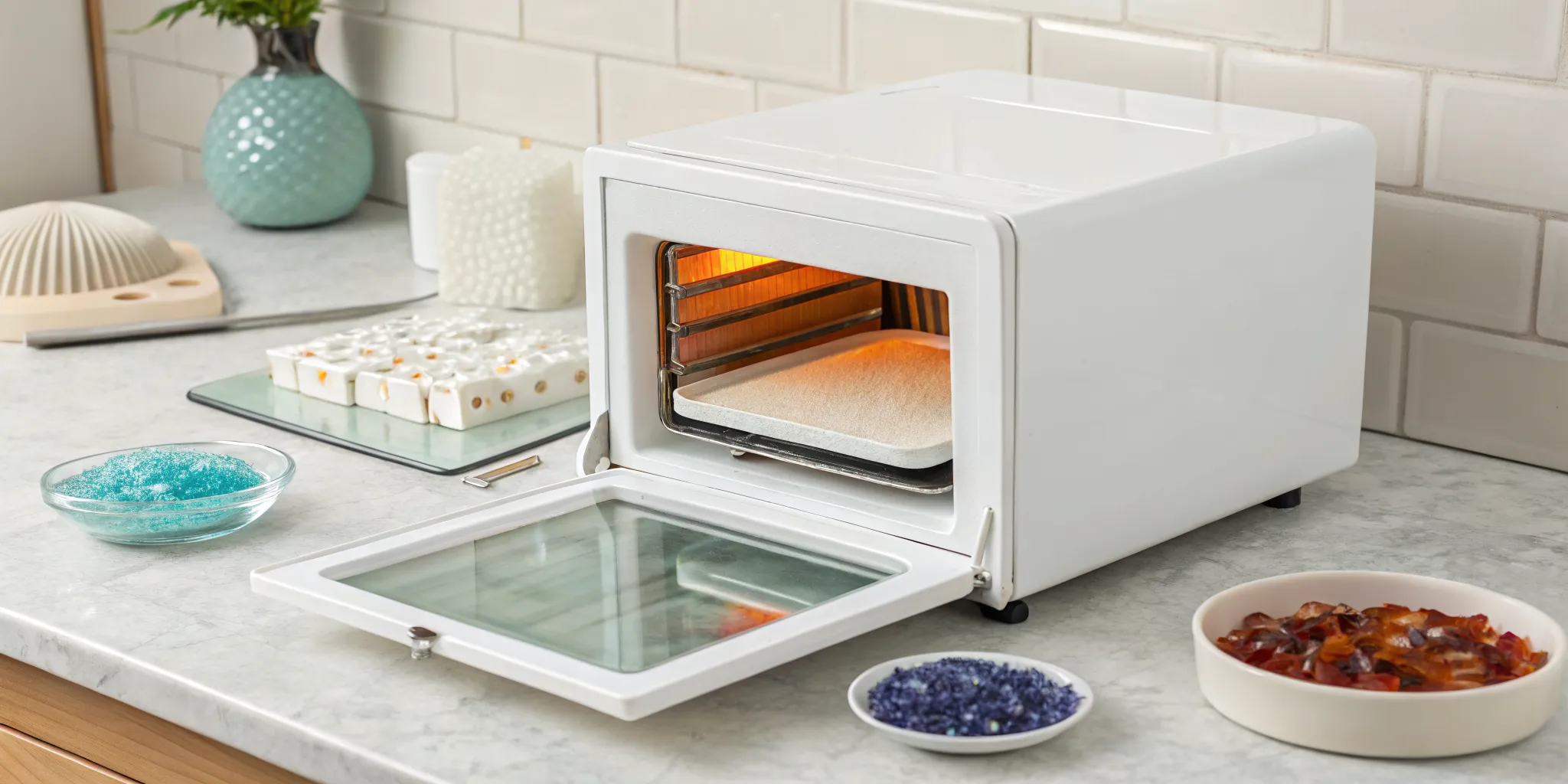
What if you could melt glass into beautiful, custom art pieces in just a few minutes, right in your own workspace? It sounds like magic, but it’s the clever science behind the glass fusing microwave kiln. This compact, cylindrical container is designed to fit inside a standard microwave, concentrating its energy to reach temperatures high enough to fuse glass. It’s an incredibly accessible tool for beginners who want to create small-scale projects like jewelry pendants, earrings, or decorative accents. While it has its limits, it’s the perfect low-risk way to explore the fundamentals of glass fusing and learn how different colors of COE90 glass interact when melted. This guide explains how it works and what you need to begin.
Key Takeaways
- Perfect for Beginners and Small Projects: A microwave kiln is an affordable way to learn the basics of glass fusing. It’s ideal for making small items like jewelry and testing color combinations before you consider a larger, traditional kiln for bigger pieces.
- Follow the Core Fusing Rules: Your success depends on a few critical habits. Always use glass with a matching COE (like COE90 or COE96), use a fresh piece of kiln paper for every firing, and allow the kiln to cool completely to prevent your piece from cracking.
- Keep a Firing Log to Get Consistent Results: Every microwave heats differently, so experimentation is part of the process. Track your firing times, glass types, and outcomes in a notebook to quickly learn your kiln’s quirks and easily replicate your successes.
What Is a Microwave Kiln?
If you’ve been curious about glass fusing but felt intimidated by the cost and space required for a traditional kiln, a microwave kiln might be your perfect starting point. Think of it as a mini kiln in a box, a small, cylindrical container designed to fit inside a standard household microwave. Its purpose is to concentrate heat and fuse small pieces of glass together, allowing you to create beautiful, custom art right from your kitchen.
This affordable tool is fantastic for beginners who want to experiment with the basics of glass fusing without a major commitment. It’s perfect for making small-scale projects like jewelry pendants, earrings, tiny ornaments, or decorative accents for larger stained glass pieces. While it has its limitations compared to a full-sized kiln, a microwave kiln is an incredibly accessible way to explore the magic of melting glass and see if this craft is the right fit for you.
How It Works
The science behind a microwave kiln is pretty clever. The kiln itself is made of a super-insulating ceramic fiber, and the inside is lined with a special black compound that absorbs microwave radiation. When you run your microwave, this inner lining converts that energy into intense heat, quickly raising the temperature inside the kiln high enough to melt glass. A typical project will fuse in just 5 to 10 minutes of firing time. The real test of patience comes next: the kiln must cool down slowly for at least 30 minutes. This gradual cooling process, called annealing, is crucial for preventing your beautiful new glass piece from cracking due to thermal shock.
Microwave vs. Traditional Kilns
Choosing between a microwave kiln and a traditional kiln really comes down to your goals, budget, and available space. A microwave kiln is the undisputed winner for accessibility. It’s inexpensive, requires no dedicated studio space, and lets you try fusing immediately. It’s the perfect tool for testing glass color combinations or creating small items like cabochons and pendants. In contrast, traditional kilns are a significant investment. They are much larger, more expensive, and offer precise control over firing schedules, which is essential for creating large, complex, or structurally perfect pieces. A microwave kiln is for dipping your toes in; a traditional kiln is for diving in headfirst.
Pros and Cons of Microwave Fusing
Like any tool, microwave kilns come with their own set of benefits and drawbacks. On the plus side, they are incredibly fast, allowing you to fire small projects in minutes instead of hours. They are also extremely affordable and compact, making them a low-risk entry into the world of glass art. However, the biggest con is the lack of temperature control. You have to learn to gauge firing time by sight, which can lead to inconsistent results and a bit of a learning curve. Because of the intense, direct heat, it’s also easy to over-fire your glass. Finally, the kiln itself has a limited lifespan and will need to be replaced after about 200-300 firings.
What Supplies Do You Need for Microwave Fusing?
Once you have your microwave kiln, gathering the right supplies is your next step. Think of it like prepping your ingredients before you start cooking; having everything ready makes the creative process much smoother and more enjoyable. You don’t need a ton of gear to start, but a few key items are non-negotiable for getting great results and, most importantly, staying safe. Let’s walk through the essentials you’ll want to have on hand before your first firing.
Choose the Right Fusing Glass (COE90 vs. COE96)
The most important rule in glass fusing is to never mix different types of glass in one project. Fusing glass is rated with a Coefficient of Expansion (COE), which simply measures how much it expands and contracts when heated. To prevent your beautiful piece from cracking apart during cooling, all the glass you use must have the same COE. The two most common types you’ll find are COE90 and COE96. Neither is better than the other, they’re just different. My advice? Pick one type, like the popular COE96 glass, and stick with it as you build your supply collection.
Why You Can’t Use Regular Glass
It can be tempting to look at a colorful bottle or an old piece of window glass and see a free supply, but please don’t try to fuse it. Regular glass, also called float glass, is not designed to withstand the thermal shock of a kiln. It has a completely different COE and chemical makeup than fusible glass, and it will almost certainly crack, shatter, or bubble up unpredictably under the intense heat. To ensure your projects turn out beautifully and safely, you must use glass specifically made and tested for fusing in a kiln.
Essential Tools and Accessories
Beyond the glass itself, you’ll need a few basic tools to handle your materials safely and effectively. First, you’ll want a simple glass cutter to score and break your glass into the shapes you want. Next, a good pair of heat-resistant gloves and a set of tongs are absolutely essential for handling the hot kiln after firing. Finally, always wear safety glasses when cutting or handling glass to protect your eyes from any small, flying shards. These tools aren’t just for convenience; they are your primary safety gear for the craft.
Kiln Paper and Shelf Primer
You can never place your glass project directly onto the base of your kiln. If you do, the molten glass will fuse permanently to it, ruining both your piece and your kiln. To prevent this, you need a separator. The most common option is kiln paper, a single-use sheet that you place between your glass and the kiln floor. Another great choice is kiln wash, or shelf primer. This is a liquid you paint onto the kiln base that, once dry, creates a durable, non-stick surface. Many artists prefer using a primer on their molds and kiln shelves because it can create a smoother finish on the bottom of the glass.
How to Set Up Your Fusing Workspace
Before you even think about cutting your first piece of glass, let’s talk about your workspace. Setting up a dedicated, organized, and safe area is the most important first step. It’s not the most glamorous part of glass fusing, I know, but getting this right from the start will make your entire process smoother, safer, and way more enjoyable. A little prep work now saves a lot of headaches later. Think of it as building a solid foundation for all the beautiful art you’re about to create. Let’s walk through the four key areas you need to consider.
Find a Heat-Safe Surface
This is a big one. Your microwave kiln will get incredibly hot, and you’ll need a safe place to set it down immediately after you take it out of the microwave. A standard countertop, a wooden table, or anything flammable is a definite no-go. Instead, find a sturdy, heat-proof surface like a couple of bricks, a large ceramic tile, or a metal trivet. This spot will be your kiln’s “landing pad.” Please don’t be tempted to use a kitchen towel or an oven mitt; they simply can’t handle the intense heat and pose a serious fire risk. Designating this spot before you begin is a critical safety measure.
Why You Need a Dedicated Microwave
I get this question all the time: “Can I just use my kitchen microwave?” My answer is always a firm but friendly “please don’t.” It’s best to use a separate, inexpensive microwave dedicated solely to your glass art. There are two big reasons for this. First, you want to avoid any possibility of contaminating your food with fumes or microscopic particles from the fusing process. Second, you protect your everyday microwave from potential damage. You can easily find a cheap or used microwave online or at a thrift store. It doesn’t need to be fancy; it just needs to work and be your designated kiln companion.
Ensure Proper Ventilation
Safety first, always. When you fuse glass, the materials can release fumes that you don’t want to be breathing in. That’s why working in a well-ventilated area is absolutely essential. A garage with the door open, a workshop, or even a room with several open windows and a fan to circulate air will do the trick. Never try to fuse glass in a small, enclosed space without any airflow. Protecting your lungs is just as important as protecting your eyes and hands. Making sure your space has good ventilation is a simple step that makes a huge difference for your health and safety while you create.
Organize Your Tools Before You Start
Think of this as setting up your creative command center. Before you start a project, gather all your tools and have them within easy reach. This includes your glass cutter, heat-resistant gloves, tongs for handling the hot kiln, and, of course, your safety glasses. Having everything organized means you won’t be scrambling to find something with a super-hot kiln waiting. A smooth workflow is a safe workflow. When you’re not rushing around looking for a tool, you can focus on your design and enjoy the creative process. It’s a simple habit that makes your fusing sessions much more relaxed and productive.
Fusing Glass in a Microwave Kiln: A Step-by-Step Guide
Ready to fuse your first piece? It’s a surprisingly simple process, but it does require careful attention to detail. Every microwave is different, so your first few projects will involve some trial and error. The key is to work safely, take notes, and have fun with it. By following these steps, you can create beautiful fused glass pieces right in your own home. Let’s walk through the process from start to finish.
Step 1: Prepare Your Glass
First things first, make sure your glass is clean and free of any dust or oils from your fingers. A quick wipe with a lint-free cloth and some alcohol will do the trick. Next, and this is the most important rule of glass fusing, you must use glass with the same Coefficient of Expansion (COE). Mixing different types, like COE90 glass with COE96, will cause your beautiful creation to crack as it cools. This is because the two types of glass shrink at different rates, creating stress that leads to breakage. Stick with one COE for your entire project to ensure a solid, lasting piece.
Step 2: Arrange Your Design
Now for the fun part: creating your design. Start by cutting a piece of kiln paper to fit the base of your microwave kiln. This paper prevents the molten glass from sticking to the kiln itself. Arrange your clean, cut glass pieces on the kiln paper. If you’re just starting, a simple two-layer stack is a great way to learn how the glass behaves. You can stack smaller pieces on top of a solid base or layer two same-sized pieces for a thicker result. Remember that the glass will spread as it melts, so keep your design centered and away from the very edge of the paper.
Step 3: Load the Kiln and Set the Microwave
With your design complete, it’s time to get it into the kiln. Carefully place the kiln paper with your glass arrangement onto the kiln’s base. Make sure everything is stable and centered. Gently place the base inside your microwave, then cover it with the kiln’s lid. The lid has a special coating on the inside that absorbs microwave energy and transfers it as heat, allowing the kiln to reach fusing temperatures. Close the microwave door and set the power to HIGH. Don’t turn it on just yet, that’s the next step.
Step 4: Fire in Short Bursts
Firing times can vary a lot based on your microwave’s power and the size of your project. There’s no single magic number, so you’ll need to experiment. A good starting point is to fire in short bursts. For a small piece, try firing for 90 seconds, then check your progress. You’ll know it’s working when you see a bright orange glow coming from the hole in the kiln’s lid. Continue firing in 30-second to one-minute intervals, checking the glow after each one. Once the entire piece is glowing uniformly, it’s likely fused. Be careful not to over-fire, as this can cause your design to lose its shape.
Step 5: Safely Cool and Unload
Once you’re happy with the fuse, the most critical phase begins: cooling. Put on your heatproof gloves and carefully remove the hot kiln from the microwave. Place it on a heat-resistant surface, like a ceramic tile or brick, in a spot where it won’t be disturbed. Now, you have to be patient. Leave the kiln completely closed for at least 30 to 45 minutes, or even longer for larger pieces. This slow cooling process, called annealing, prevents thermal shock. Opening the kiln too soon will expose the hot glass to cool air, causing it to crack instantly. After it has cooled, you can finally open the lid and admire your new creation.
Key Safety Precautions for Microwave Fusing
Working with a microwave kiln is exciting, but it’s also a process that involves extreme heat. Think of safety not as a list of rules, but as the best way to protect yourself and your beautiful new creations. When you get into good habits from the start, you can focus on the fun part: making amazing fused glass art. Following a few simple but critical precautions will ensure every fusing session is a safe and successful one. These steps are easy to remember and will quickly become a natural part of your creative routine.
Wear the Right Protective Gear
First things first, let’s talk about protecting yourself. The microwave kiln gets incredibly hot, so you’ll need a good pair of thick, heat-safe gloves. Think welding gloves or a very reliable pair of oven mitts designed for high temperatures. You’ll use these anytime you handle the kiln, especially when moving it from the microwave to your cooling surface. It’s also a great idea to wear safety glasses. While the glass is contained, you are still working with glass pieces that can have sharp edges before firing. Getting your safety gear ready before you even touch the glass is the first step to a smooth and worry-free fusing process.
Handle a Hot Kiln with Care
Your microwave kiln can reach temperatures around 1500°F (or 815°C), which is hot enough to glow. Always handle it with extreme care and your trusty heat-safe gloves. When you take the lid off to check your piece or after firing, never place it directly on your counter. Always place the hot lid face up on a heatproof surface like a ceramic tile or a trivet. This prevents scorching your work surface and reduces the risk of accidental burns. Treating all kilns, big or small, with this level of respect is a hallmark of a great glass artist.
Never Rush the Cooling Process
Patience is your best friend when it comes to the cooling stage. Once your piece is fused, take the entire kiln out of the microwave, keeping it level, and place it on your heatproof surface. Now, leave it alone. Let it cool with the lid on for at least 10-20 minutes, and even longer for thicker pieces. Opening the kiln too soon can cause thermal shock, where the rapid temperature change causes your beautiful COE90 glass to crack. Resisting the urge to peek is tough, but waiting ensures your piece cools down gradually and stays in one piece.
Common Beginner Mistakes to Avoid
When you’re just starting out with glass fusing, a few hiccups are totally normal. Think of them as learning experiences! But to help you get more beautiful results right from the start, let’s walk through some common pitfalls. Knowing what to look out for can save you time, materials, and the heartache of a cracked project. It’s easy to get excited and rush through a step, but patience is a huge part of the glass fusing process. By avoiding these simple mistakes, you’ll be creating stunning glass pieces you’re proud of in no time. From picking the right glass to cooling your project properly, these tips will help you build a strong foundation for your new hobby.
Mixing Incompatible Glass (COE)
One of the golden rules of glass fusing is to never mix glass with a different Coefficient of Expansion (COE). COE is a number that tells you how much glass expands when heated and contracts when cooled. If you fuse two pieces of glass with different COEs, they will cool at different rates, causing stress that will almost certainly crack your project. Always use the same type of glass for a single project. For example, if you start with COE90 glass, every other piece you add must also be COE90. The same goes for COE96 glass. Keep your glass scraps organized and labeled to prevent accidental mixing.
Over- or Under-Firing Your Piece
Finding the sweet spot for firing time takes a little practice, as every microwave has a different wattage and heating pattern. Most small projects fuse in about 5 to 10 minutes, but this is just a guideline. Over-firing can cause your glass to lose its shape and color, while under-firing will result in pieces that aren’t fully fused together. Start by firing in short bursts and checking your piece periodically. Keep a firing log where you note your microwave’s power level, the firing time, and the results. This record will become an invaluable guide as you continue to create new projects and learn how your specific kiln behaves.
Reusing or Skipping Kiln Paper
Kiln paper is your project’s best friend. This thin, disposable paper creates a barrier between your glass and the kiln shelf, preventing the molten glass from sticking permanently. You must place a fresh piece of kiln paper on the kiln base before every single firing. It might be tempting to reuse a piece that looks clean, but don’t do it. The paper loses its protective qualities after one firing and will fail, leaving you with a project fused to your kiln. Skipping it altogether is an even bigger mistake that can ruin both your artwork and your kiln shelf. Always use a new sheet for every project.
Opening the Kiln Too Soon
The urge to see your finished piece is strong, but this is where patience is most critical. After the firing is complete, you must let the kiln cool down slowly and naturally. Opening the lid too soon exposes the hot glass to cool air, creating thermal shock that will cause it to crack. Once you remove the kiln from the microwave, place it on a heatproof surface and leave the lid on for at least 30 minutes. For larger or thicker pieces, you may need to wait even longer. A good rule of thumb is to wait until the kiln is cool enough to touch with your bare hands before peeking inside.
Using Too Little Glass in Your Design
When glass heats to a molten state, physics takes over. The glass will try to pull itself together, seeking a uniform thickness of about 6mm (or 1/4 inch). If you start with a design that is too thin, like a single layer of 3mm glass, it may shrink and pull into a blob instead of holding its shape. To avoid this, a good starting point is to use at least two layers of standard 3mm glass for your projects. This gives the piece enough volume to maintain its general shape as it fuses. Don’t be afraid to stack layers to create the thickness and dimension you want in your final piece.
Tips for Achieving Great Results
Getting that perfect, glossy finish on your fused glass piece is incredibly satisfying. While microwave fusing involves a bit of trial and error, you can dramatically improve your results by following a few key practices. Think of these tips as your foundational habits for success. They’ll help you avoid common frustrations and give you the confidence to experiment with more complex designs. By being methodical and paying attention to the details, you’ll be creating beautiful, consistent pieces in no time.
Use Glass of a Consistent Thickness
One of the most important rules in glass fusing is to ensure your glass pieces are all about the same thickness. When you layer glass, thinner areas heat up and melt much faster than thicker ones. This can lead to an uneven fuse, trapped air bubbles, or distorted shapes in your final piece. For best results, aim for a total project thickness of about 6 millimeters, or two standard sheets of glass. While most COE90 glass sheets are uniform, it’s always a good idea to visually inspect your cuts before stacking them, especially if you’re using pieces from different sheets or adding smaller decorative elements.
Start with Small, Simple Designs
When you’re just starting, it’s tempting to jump into an ambitious project, but microwave kilns are best for small items. Beginning with simple designs like pendants, earrings, or small magnets is a fantastic way to learn the ropes. This approach allows you to get a feel for the fusing process without the pressure of a complex design or the risk of wasting a lot of glass. You can focus on mastering the basics, like how long to fire your piece and how different colors interact when melted. Once you’ve built some confidence and understand how your specific kiln works, you can move on to more intricate projects.
Keep a Firing Log to Track Your Progress
Every microwave is a little different, so what works for one person might not work for you. This is why keeping a firing log is a game-changer for getting consistent results. In a simple notebook, write down the details for every project you fire. Note the type and COE of the glass, the number and thickness of your layers, the power level of your microwave, and the exact firing times you used (including any pauses). Don’t forget to jot down how the finished piece turned out. This log will become your personal guide, helping you easily replicate your successes and figure out what went wrong if a piece doesn’t turn out as expected.
Create a Test Piece First
Before you commit your favorite glass to a new design, always create a small test piece. This is especially important when testing a new firing schedule or using glass you haven’t worked with before. A test fire allows you to check for compatibility between different pieces of glass. Even if they are all labeled as the same COE, slight variations can sometimes cause stress or cracking. By fusing a few small scraps of your COE96 glass together first, you can confirm they melt together smoothly and that your firing schedule produces the desired effect. It’s a simple step that can save you a lot of time and material in the long run.
Fun Project Ideas to Get You Started
Now that you understand the basics, it’s time for the fun part: making something! A microwave kiln is perfect for diving into small-scale projects that offer quick, satisfying results. These ideas are designed to help you get comfortable with the fusing process, experiment with different types of glass, and build your confidence. Don’t worry about creating a masterpiece on your first try. The goal is to play with color and heat, learn how the glass behaves, and enjoy the creative process. Let’s look at a few simple projects that are perfect for beginners.
Fused Glass Jewelry
This is the most popular starting point for a reason. Microwave kilns excel at firing small pieces, making them ideal for creating custom jewelry. You can design unique pendants, earrings, and even cufflinks in about 30 minutes. Start by layering small pieces of compatible COE90 glass on your kiln shelf. Experiment with vibrant dichroic glass for a pop of sparkle, or use tiny bits of stringers and frit to add texture and detail. Once fired and cooled, you can attach your creations to earring backs or pendant bails. It’s an affordable and fast way to test color combinations and produce wearable art.
Suncatchers and Ornaments
Ready to try something a little bigger? Suncatchers and ornaments are a great next step. While you’re still working on a small scale, these projects allow you to play with more complex shapes and designs. You can create beautiful holiday ornaments, small window hangings that catch the light, or even decorative plant stakes for your indoor garden. This is a fantastic opportunity to experiment with layering different colors of COE96 glass or adding artistic flair with glass confetti and frit. Since these pieces are small and flat, they are perfectly suited for the even heating of a microwave kiln.
Small Decorative Dishes
While a microwave kiln can’t be used for slumping glass into curved shapes (that requires a traditional kiln and molds), you can still create beautiful flat pieces that function as small dishes. Think of them as fused glass coasters or decorative trays perfect for holding rings, keys, or soap. You can create a design by arranging cut pieces of glass, then full-fuse them into a single, solid piece. This is a great way to practice cutting glass and arranging more intricate patterns. Just remember that the final result will be a flat, smooth object, not a bowl with raised sides.
Is a Microwave Kiln Right for You?
After learning the ins and outs of microwave fusing, you might be asking yourself if this little kiln is the right tool for you. It’s a great question, because while microwave kilns are a fantastic entry point into glass art, they aren’t the perfect fit for every artist or project. Their main appeal is accessibility. They are affordable, don’t require much space, and can fire small projects in as little as 30 minutes. If your goal is to create unique glass jewelry, test out fun color combinations, or just dip your toes into the world of fusing without a huge investment, a microwave kiln is an excellent choice.
However, it’s important to be realistic about their limitations. The biggest challenge is the lack of precise temperature control. You can’t program a specific firing schedule, so you have to learn through trial and error, which can make getting consistent results tricky. They are also best for small items, so you won’t be making large plates or platters. For safety and to avoid contamination, you’ll also need a dedicated microwave just for fusing. If you’re a hobbyist looking for a fun way to make small pieces or a seasoned artist who wants a tool for quick experiments with COE90 glass, a microwave kiln is a solid investment. But if you plan to create larger art or sell your work professionally, you’ll likely want the precision and capacity of traditional kilns.
Related Articles
- Microwave Kiln for Beginners: What to Buy & How It Works
- The Beginner’s Guide to the Microwave Kiln – ArtGlassSupplies
- Best Glass Kiln for Beginners: A Buyer’s Guide – ArtGlassSupplies
- The Ultimate Glass Fusing Kiln Guide for Artists – ArtGlassSupplies
Frequently Asked Questions
Can I use my regular kitchen microwave for fusing? I strongly advise against it. It’s best to get a separate, inexpensive microwave just for your glass art. This prevents any chance of fumes or tiny particles from the fusing process contaminating your food. It also protects your everyday appliance from any potential mishaps. You can usually find a used one for a great price online or at a thrift store.
Why is using the same COE glass so important? Think of COE (Coefficient of Expansion) as the “language” the glass speaks when it gets hot. All the glass in one project must speak the same language. If you mix glass with different COEs, like COE90 and COE96, they will expand and shrink at different rates. This creates internal stress that will cause your piece to crack, either during cooling or even days later.
How can I tell when my glass is finished firing? You’ll learn to judge this by sight. After a few minutes of firing, you should see a bright orange glow coming from the hole in the kiln’s lid. Your piece is likely done when the glow is uniform and consistent across the entire project. It takes some practice, which is why keeping a firing log with your times and results is so helpful for learning your specific microwave’s personality.
My glass piece cracked after I took it out of the kiln. What went wrong? This is almost always caused by thermal shock. It happens when the hot glass is exposed to cooler air too quickly, which is why the cooling-down period is so important. After firing, you must let the kiln sit, completely closed, on a heat-safe surface for at least 30 minutes. Resisting the urge to peek is tough, but this slow, gradual cooling process is what keeps your beautiful work in one piece.
What’s the difference between kiln paper and kiln wash? Both products do the same important job: they stop your molten glass from sticking to the kiln. Kiln paper is a single-use sheet you cut to size and place under your project, making it quick and easy. Kiln wash, or shelf primer, is a liquid you paint onto the kiln base. After it dries, it creates a durable, non-stick surface that can last for several firings. Many artists find kiln wash gives the bottom of the glass a smoother finish.